Showing posts with label Argentina. Show all posts

Monday, 3 May 2010

Buenos Aires

For a city I have inhabited for the last eleven weeks, I have had curiously little to say about Buenos Aires. Maybe that's because I can't quite make up my mind. I will atone for that now by saying everything there is to say, and more, in one post....

It is a city of sharp contrasts. At times European in character and appearance, yet defiantly South American too. Lavish and luxuriant, but poor and destitute. Beautiful on one hand, ugly on the other. Like all big cities, it feels crowded and polluted. People don't look that happy, though if you manage to engage with them you normally find that they are. Their character reveals itself in different ways.

Ten years ago, the Argentine Peso and the US Dollar were worth the same. Now they're about 4 to 1. In the economic crisis of the 90s and early 2000s, Argentineans had their life savings devalued by around 80%. In the heart of the crisis, the streets were full of cartoneros - guys pushing big wheeled carts around, sifting through rubbish looking for anything recyclable or reusable. There are still plenty of them about.

On every subway train, someone is selling something. They make their sales pitch to the whole carriage, then walk up and down leaving their wares on people's laps, before collecting them again, and hopefully making the odd sale. Can you imagine this in London? It's impossible. Here, no one would dream of stealing from someone trying to make a living in this way.

You can't walk two blocks without being offered a pair of socks. Or having an extensive range of bootlegged DVDs to peruse. Or having a splat tomato demonstrated to you, or tripping over a couple of hundred mate gourds, fake Ray-Bans or mobile phone covers. But no one is really trying to rip you off - just selling something for a fair price.


Professional dog walking is a mainstream industry

There's still daylight robbery of course, but it's perpetrated less by pickpockets or muggers as by the swanky boutiques and hotels of Recoleta and Palermo. Across the railway lines from Recoleta, where top European brands peddle their overpriced luxury goods whilst mothers and babies beg outside, is villa 31, what we might call a shantytown.

There are plenty of villas miserias (literally miserable towns) dotted around the city. Villa 31 is the most central, right next to the main Retiro bus station. Little brick rooms are stacked up on top of one another, and look like shoeboxes made of lego. It's a good job the Aires are Buenos, because they look like they could blow away at any minute. The streets are dirty and dusty. That two blocks away tourists are forking out hundreds of dollars for Gucci handbags is a lost irony.

One of the poorest central neighbourhoods is La Boca - the mouth of the river. Tourists flood down here to the caminito - a paved street crammed with bars and third rate restaurants - to photograph the colourful houses and watch tango displays. There's proper history here of course - the area was home to Italian immigrants, who decorated their homes with paint left over from their boats. Sadly, it just feels like a tourist trap now. A ring of police make sure you don't get mugged for two blocks, while the festering poverty of the rest of the area is left to its own devices beyond. I still managed to take this picture just to prove that I had actually been to Buenos Aires.


El caminito, La Boca

A little further north from La Boca is Puerto Madero, Buenos Aires' newest and most modern barrio. Swanky restaurants line the old dock, and beyond, glitzy high-rise apartment blocks and hotels reach for the sky. The architecture is fantastic - modern, dynamic and inspiring. It is the aspirational side of the city, and a glimpse of what it is capable of. Walk through all of that and you hit the costanera, where the carritas flog choripan to the normal people. I like it along here - in the shadows of the high-rises, a little bit of the real Buenos Aires.


Puerto Madero Hilton

High-rise

Carritas de la costanera

Downtown is pretty snide. In the way that Oxford Circus to Tottenham Court Road is pretty snide. Away from the tourists, money changers, cheap tat shops and bogus electrical retailers, there are a few nice areas.


Tourists - you have been warned

Plaza de Mayo is the centre of town, and home of permanent protesters and war veterans. During the dirty war the famous madres de plaza de mayo congregated here to protest against the disappearance of their sons under the military government. Their symbol of a white shoal is painted all over the ground in tribute to their remarkable courage.


Plaza de mayo
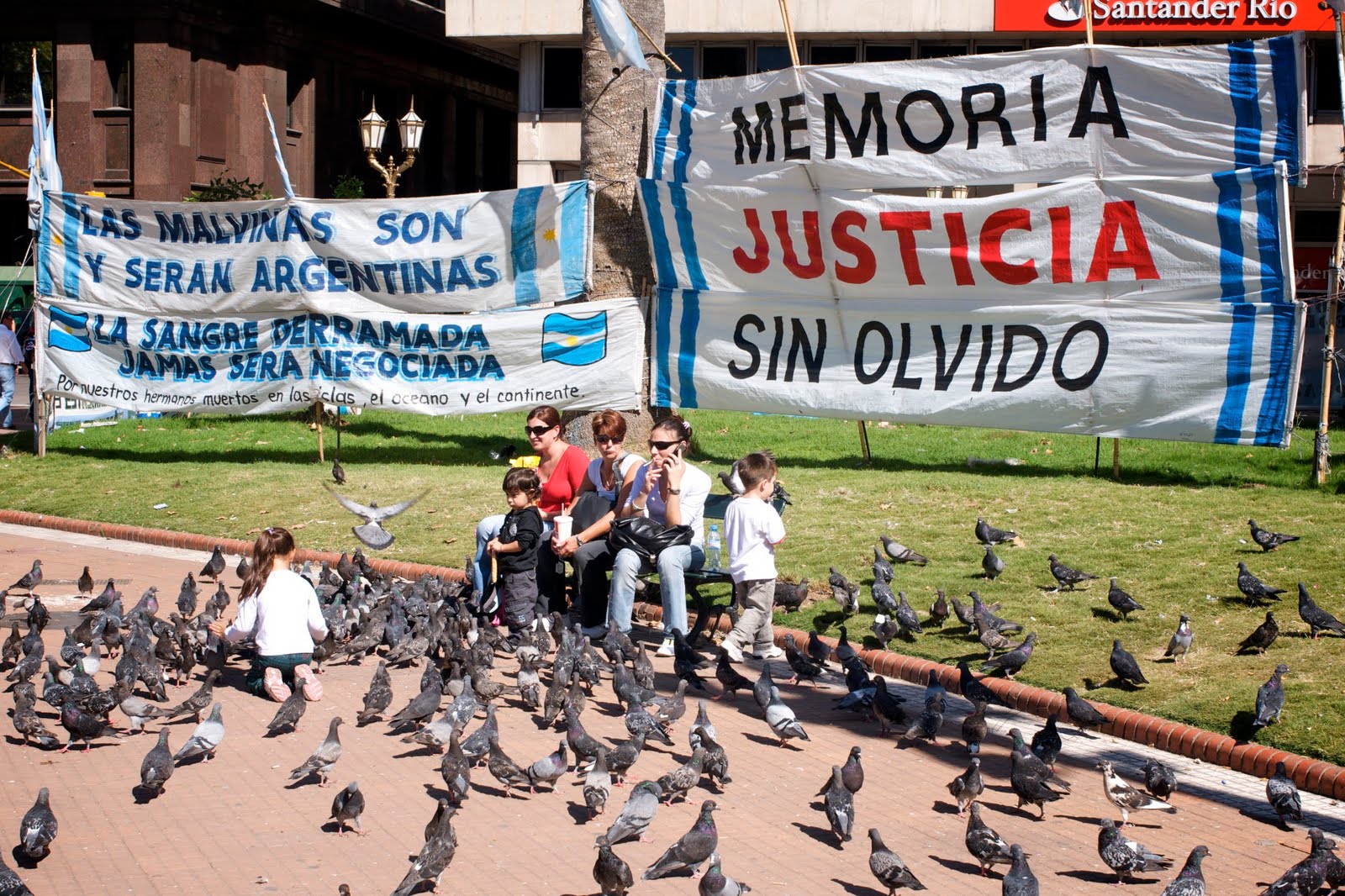


A few blocks south of the centre is San Telmo, my favourite neighbourhood. The narrow cobbled streets still bear the remnants of the old tram tracks. Crumbling buildings, traditional cafes and antique shops sit side by side. It was, and still is, one of the poorest barrios, but its cultural wealth draws in the tourists. It has a slightly edgy, real feel to it. Graffiti and murals hang off every wall. It's the kind of place where novels are set. And written.


San Telmo


Every Sunday San Telmo throbs with a huge feria, or street market. The usual rubbish nestles in amongst antiques, paintings, photographs, handmade toys and clothes, whilst the tourists rub shoulders with the porteños. Impromptu tango shows erupt all over the place, kids display their accordion playing skills and little old men break hearts with their gentle guitar strumming.


Other parts of town, most notably Palermo, where I have been living, feel a lot more European. At its best, the city can be very stylish - a bookstore in an old theatre, a giant flower sculpture with petals that open and close with the light. Colourful, wild buses that never quite go where you expect them to. The streets buzz with activity, not to mention traffic. At its worst it can be filthy, stinking and claustrophobic.


El Ateneo

Floralis Genérica

Colectivo


In amongst all the mayhem, dog turds and contradictions, are a few little sanctuaries. They mostly take the form of cafes, where one can while away the hours sipping occasionally bearable coffee and watching the world go by. It's hard to imagine the place without them, and you kind of know the other people are in there for the same reason; to take refuge.


Towards the end of the 15-hour flight from London, the Captain announced that we would shortly be arriving in "Beautiful Buenos Aires." At times, I can see his point, at others, less so. Part of the city's appeal is this paradox - you need to constantly shift your perspective in order to see it as a whole. If you stay still, it will grow old on you quickly and lose its charm. Keep moving then - for me that means leaving of course. Tomorrow. Like all good things in life that we take for granted, I know I'm going to miss it once it's gone.

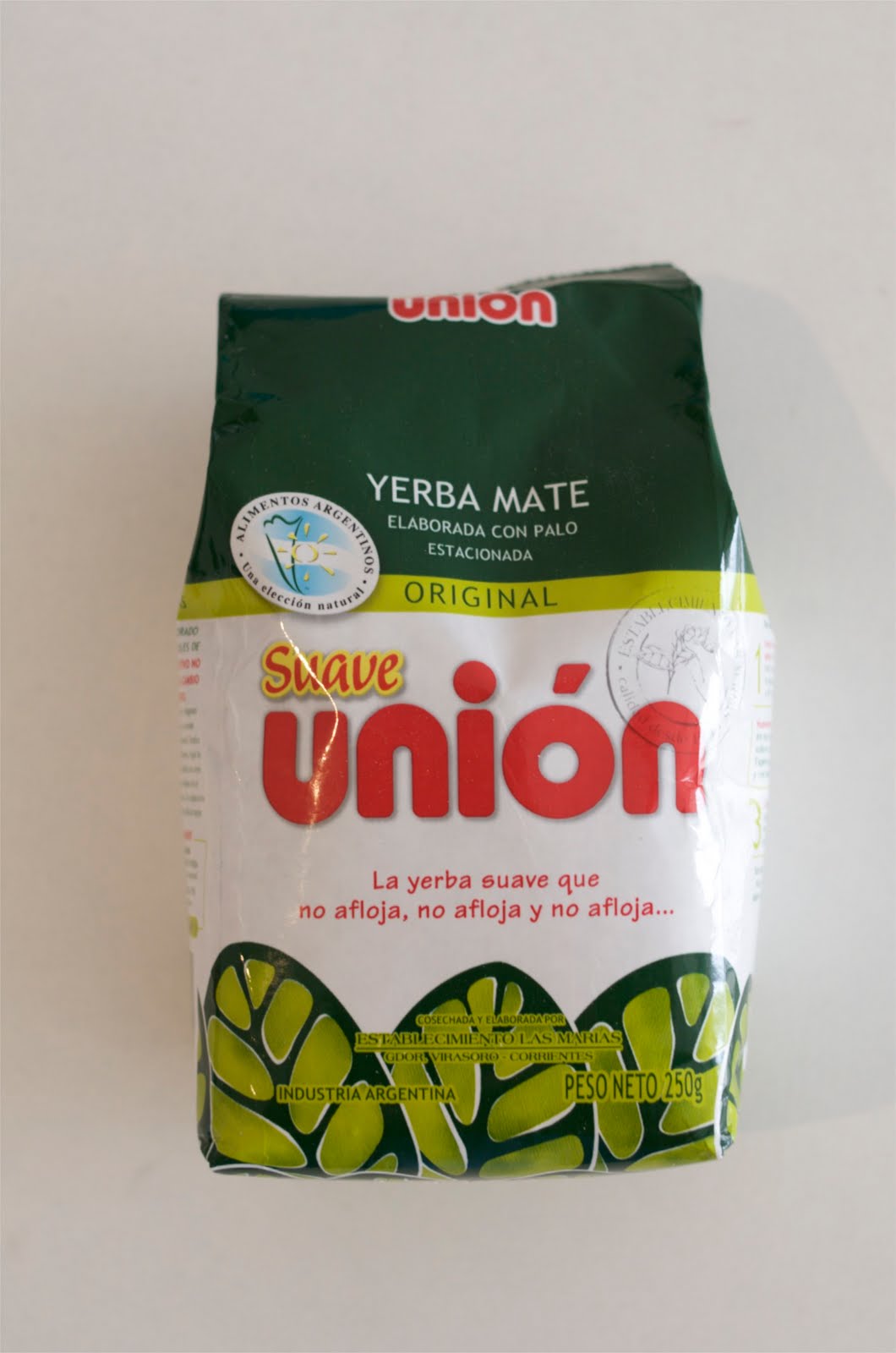
Yerba Mate

I can't leave Argentina without saying something about mate (ma-tay). Mate is to the Argentineans (and the Uruguayans, Paraguayans, Chileans, plus a few Bolivians and Brazilians who live near their borders) what tea once was to the English. The articulation of a nation's civility, in the form of leaves and water.

You need three things. Firstly, Yerba (the plant) dried and packaged. There are hundreds of varieties that range in bitterness (the drink is basically very bitter, though you can add sugar if you wish). The stalks of the plant are usually included in the mix, that looks not entirely dissimilar to good old 'normal' weed we used to smoke when I was young and stupid.


Yerba mate

The dried leaves and stalks 

Next you need a gourd or mate in which to prepare the brew, and a bombilla, a kind of metal straw through which to drink it. You almost fill it to the top with yerba, and bang it on your hand to remove any excess dust. In goes the first serving of hot (not boiling or boiled) water, and you're ready to drink your first mate.

Mate, yerba and bombilla: the holy trinity

Drinking it feels a bit like smoking a pipe. I can't help but feel a little Holmesian as I pace up an down my apartment puzzling over the latest mysteries to which I turn my keen mind.


A three pipe problem

When the first mate is drunk, you just top up again, and keep going until it loses its flavour. Drink it at home or out and about, with gourd and flask of hot water tucked under one arm. The dexterity of Uruguayans in this respect is amazing, they carry their flask and mate no matter what else they are doing (riding motorbikes, horses, climbing ladders). Drink it alone, or better still, among friends, filling the gourd for each drink and passing it around like a peace pipe. If only we'd had yerba instead of spliffs when I was younger. I'd have made a great detective.

Thursday, 15 April 2010

Iguazú Falls

I know there's all that crap about water spinning the other way down the plughole in the southern hemisphere, but I didn't realise a similar phenomenon affected their chickens. It does. All last night, gangs of nocturnal cockerels cock-a-doodle-do'ed their way through some sort of battle re-enactment, right outside my window. As the first tiny rays of the sun crept over the distant horizon, they packed up their things and fell into silence. After four hours of lying under the pillow with bits of toilet paper stuffed in my ears, finally I get a chance to sleep.

It was round about this time that the huge canine population of Puerto Iguazú woke up, and took over where their feathered comrades left off. Another couple of hours slip from my grasp. I can put up with this infuriating lack of sleep only on account of the fact that today I am going to visit one of the natural wonders of the world: Las Cataratas de Iguazú.

I didn't know much about Iguazú Falls until today. Er, a bunch of waterfalls right? Seen a few in my time. Seen one you've seen them all right? Like statues, walls, pyramids, hanging gardens and all the other so called 'wonders of the world'. You have to part with 85 hard earned pesos just to get in the park, and another 135 are coaxed out of you to take a couple of boat trips. We trudge off, tickets in hand, smeared in Off.


You hear Iguazú Falls long before you see them. The first view is a wide one - the main group of falls to the right and the massive Garganta del Diablo (Devil's Throat) on the left. It's a spectacular sight. Someone needs to do something about those trees though.


We're on our way down towards the boat to take us right up to the edge (the bottom edge, not the top Mum). The different perspective it offers is tremendous - looking up into the falls as the huge droplets rain down. This turns out to be an excuse to drench tourists, since the bastards then drive us right underneath. You can't look up, it's like being taken out with a fire hose. Saturated from the experience, we are able to take on a few more wet bits without worrying too much.


By the time we've taken the train to Devil's Throat, we've pretty much dried out. We're up top now, and following the walkway out to hover right over the top. All around is tranquil water, barey a ripple on its surface. How I pity the poor sucker who first paddled down here in his canoe, gently dozing off in the tropical sun.


The contrast between this and what awaits couldn't be any greater. Inches away from the dead calm, comes the edge. The water drops down into an abyss. The wind gusts and the spray is belched back up, soaking everyone. It is so dense, you can't even sense the bottom, let alone see it.


Standing over this, you cannot help but feel completely powerless. Awesome is a much overused word, not least by me, but this it is the only one to really describe this sight. It is the greatest display of the raw power of nature I have ever laid my eyes upon. Leaning on the rail looking over the edge, the roar, the spray and the sheer inevitability of the fall are compelling. It would be one hell of a way to go. In fact, I can't help but think it looks a little like a giant plughole.

Coming back tomorrow to have a look from the Brazilian side, so long as I get some sleep.

Wednesday, 14 April 2010

Polo - hardest game in the world

A couple of years back, in the middle of my efforts to extract myself from my bookmaking business, I made a list of things I was going to do with the time I was buying. I've been working my way through it slowly enough. Some things on it will never happen, like running a marathon. Riding a horse was languishing near the never gonna happen pile too, until Sunday.

My friends Will and Katie have been in town for the last week, and they wanted a polo lesson. I've never ridden a horse before in my life. But worse than this, I am an incurable chicken. I'm afraid of getting on a horse. Why wouldn't I be? I spent eight years watching them race around fields, coldly calculating what they were likely to do, and more often than not watching them do the exact opposite. If you're gambling, you can mitigate these irregularities by choosing when to bet, and how much. If you're sitting on the bastard's back when he changes his mind....well. No thanks. And with a polo mallet in one hand? Don't make me laugh.


The pros make it look easy. Which it is. Not.

Early signs are encouraging. Fernando, our instructor, is 34 and only learnt to ride at 30. We watch some pros practice for a while, then saddle up. Not helped by the 24 hour old hangover that is still lingering around, I haul my sorry ass onto the back of Gran Oso, my mount for the afternoon. Gran Oso, as in Big Bear. After alarmingly brief instruction on how to control a horse, we are walking the length of the field. Old Gran Oso is pretty languid. Big Bear - like Gentle Ben, I guess? The others walk on ahead, Grand Oso and I take things steady. I decide he needs to get on with it, but the whip, my heels, and my Spanish fail to elicit a response.


Team Polo Sport

At the end of the field, we stop for further tuition. We are all calm and still. Katie has handled a horse before, no dramas there. Sabrina too, though she looks a little higher up and her creature keeps eating grass in defiance. I'm not sure about the semantics, but presumably the difference between a pony and a horse is principally one concerning height. Will is a big lad, his mount (pony?) less so. In fact I think he may be scratching the turf with his heels.

Will atop his remarkable shrunken horse

After more walking, Gran Oso and I begin to form a bit of a bond. He's still ignoring the whip though, so old Fernando gives him a few cracks to bring him into a trot. Now I know why it's called a trot. I shit myself with fear. We must be doing all of five miles an hour, but I am convinced he is either going to bolt, rear or maybe I will just crush my balls on the saddle. I yank the reigns and the big bugger slows down in his own time.


Man and beast in perfect harmony

After a brief interval to assess the damage and begin understanding why John Wayne walked the way he did, I remount, polo mallet in hand. Since I was using my right hand to cling on for dear life before, things are now a lot more interesting. Firstly, Gran Oso stops listening to me. The little shit. We are standing, perfectly still, listening to Fernando explaining how to hit the ball (unlikely) when he decides to start reversing. I push his neck. He backs up a little more. Oso, tranquilo.

Fernando is slightly irritated by my interruption. Disculpa. The fucker's off again. He won't stay still. ¡Oso! ¡Para! Left. Right. Doesn't matter. He's just not interested. I study him for a moment. I think he has some kind of skin complaint you know. There are bits of it flaking off his neck, the poor guy. It is round about this time that Sabrina informs me that his name may actually be Granoso and not Gran Oso. Granoso means spotty. But not in a nice sense - as in acne ridden. Great. Not so much Gentle Ben as the spotty little brat who used to feed him.


Katie in 'action'


Sabri looking every inch the professional

Granoso perseveres with the theme of completely ignoring my commands. At one point, he decides we need to pop back to the farm for something, and I reluctantly follow. Fernando implores me to assert my authority but I am completely powerless. The rest of the afternoon passes in a haze of disobedience, punctuated only by my frustrated pleas. ¿Qué pasa? ¡Oso! ¿Qué es tu problema? Every ¡Vamos! and kick of the heel earns the old cold shoulder, and eventually I give up. It later transpires that I have been calling him cabello (the name of my old street - meaning hair) instead of caballo (horse) for most of the afternoon. I can only assume that this is motivating his defiance.


Granoso and I bossing the game from the middle

The 'match' that crowns the afternoon is a laughable affair. Katie has the riding skills but hasn't grasped the rules, so keeps crossing the line of the ball. Will rides rather like you might imagine a gorilla would ride a cat, but his ball skills are good, thanks mainly to the fact that he is only about eighteen inches off the ground. Sabrina can ride, but can't reach the ground, unless her horse has planted himself to it in order to eat more grass, which happens fairly regularly. Old crater face and I are playing a sort of holding role - I hold his reins; he holds me in contempt. We flirt our way around a wide circumference of the action with little purpose, occasionally catching sight of the ball.


Eventually, as the shadows lengthen and the buttock muscles contract, we sidle our way back to the ranch. The horses get hosed down and we sip a cerzeva whilst comparing insect bites, muscle cramps and exaggerating our achievements. I quietly reflect upon another tick beside the list. Next time I think I'll just have horse riding lessons. I'm sure the mallet was the root of the problem - interfering with the primeval signals Gran Oso and I were sending one another. I mean, why confuse the issue? And polo? It doesn't get any more bourgeoise than that does it? Hardly my style at all. Nope. Not my bag. Tried it - yeah, it was fun, with a decent horse, I could have been useful. How long's a marathon these days? Still just the twenty six is it? Oh, go on then, might as well give it a....

Tuesday, 13 April 2010

Nuestros Caballos


Polo is a big deal in Argentina. A little too late we realised we'd missed the chance to watch a proper polo match as part of a week long celebration of Argentine horses in town. We settled for second best and went to the Nuestros Cabellos show in Palermo to watch some arena polo and remind ourselves what horse shit smells like.


They kept punting the ball out of the arena, and the confined space seemed to severely restrict the movement of the game, not that I know anything about polo. Instead I sneaked off to take some pictures that didn't require four digits of ISO.


Monday, 12 April 2010

Milonga

I'm sure there are a lot of people who come to Argentina, watch glitzy tango shows, and go home happy. I'd probably be one of them. Except after the life-changing meal at Cabaña Las Lilas, we went to a Milonga at Confitería Ideal.

Unlike the tourist shows that charge 200 pesos to watch accomplished dancers flaunt their moves, a milonga is an open floor for people to come along and dance. We don't partake, because we can't tango. Those that do, can. But they are not experts or professionals, just normal people.

I quickly realise something about Argentine tango. It is etched on the faces. The odd couples. Tall and short, fat and thin, young and old. Straight and crooked, quick footed and infirm. They clutch one another tightly, their expressions a fusion of thoughtless concentration and unparalleled joy. It's etched on mine too now, and it's not just the gin and tonic. There is just something beautiful going on.

They wear all sorts of clothes. Some are smart little old men in their Sunday best, another is in his AC Milan tracksuit. I watch him leave the dancefloor and he can't actually walk properly. But it doesn't stop him from dancing, because this is not physical. It is not two bodies walking together embraced and entwined. It is two people. And judging by some of them, they've been doing it together for a very long time.

For a few short intervals, the floor clears and we are treated to a couple of professional dancers. They are mesmerisingly good. The graceful economy of their steps, their embrace. The feet kick up between the legs and they turn and move and you don't even hear the music, just see it. It's almost as though the most beautiful thing is what is not happening, and it starts me thinking.


Were our lives a dance, what would they look like? A sweeping elegant tango in a glitzy tourist trap? A slow but loving shuffle of an old couple who have danced together for sixty years? Or a lurching drunk hamming up a moonwalk at his best friend's wedding? Learn to tango, and I might just learn to live a little better too.

Sunday, 11 April 2010

A few parrillas

I'm cheating here. I'm digging out a few thoughts from my restaurant notebook because I need to set a scene. Here are a few of the best parrillas I've visited:


El Solar del Conventa, Salta

Frommers says No 1 in town. I love the town, maybe a parrilla to fall in love with too?

Grill in the front, always a good sign. Smart staff, multitude of wines. Wonderful building. A big fat leather bound menu and a busy Monday night.

The guy at the next table tells me his lomo was too salty. He also tells me he shagged the air hostess on his flight from Sydney, so I take his advice with a pinch of it. Bread comes with a great tomato salsa seasoned with thyme. Expectations grow.

Salad is ok. Ribs are good. Bit salty. Potatoes are poor but that's standard. Great local malbec though, Elementos. Good then but just shy again. Still hanging on for the night I get blown away. Five weeks and still waiting.


La Raya, Palermo Viejo

The book talks about a pioneering restaurant in the BsAs parrilla scene. It's not that busy and they're all porteños. Even Coco Basile is here. It must be good. Staff and tables are impeccably dressed. Can't say the same about the punters though. One guy appears to be wearing Maradona's tracksuit. From his Napoli days.

Mollejas are great, crispy, lots of lemon. Asaso de tire is not great. Tough and lacking. Chips come about an hour later and are rubbish. This guy might have pioneered BsAs parrillas but now he needs to pull his finger out.


La Brigada, San Telmo

Bags of promise this one. Good write ups, recommendations from porteños. What can possibly go wrong?

Big place and great inside. Old pics smother every wall, footballs, pennants and memorabilia. Bursting with character. The owner is floating about too, looking like a cross between an extra from the Sopranos and someone out of my Mexico '86 sticker album.

Mollejas de chivito (goat sweetbreads) con salsa de verdeo: bit soft for my liking but sauce is excellent. Chinchulines de chivito (goat intestines) are plaited - look a bit offal like. When crispy, they're okay, when soft, not so. They're too salty.

Asado de tira very tasty but a struggle in places. Waiter makes a show of cutting the 22oz baby beef with a spoon. It is excellent, but too much middle and not enough crust. Why not cut it into steaks? It looks daunting - like you're never going to finish it. Surely it could be done better. Same old gripes.

Cabaña las Lilas

So many times on this trip have I walked into a restaurant with a tingle of anticipation. Maybe, just maybe, I am about to experience something special. Getting out of the cab I turned to Jon and said I had a good feeling. I instantly regretted doing so. I'd said, or thought it, too many times. I needn't have worried.

Cabaña Las Lilas is a big place. A lot of tables, a lot of waiters. A plate arrives with assorted hors d'oeuvres. Bread too. A little plate between two of assorted savouries to accompany the cup of excellent vegetable soup. I barely noticed these things arrive, the waiters floated around the table without ever really disturbing us. When the hors d'oeuvres were finished, another plate appeared in their place.

We shared an entrada of mollejas (sweetbreads). They were the finest I have eaten in Buenos Aires, and I have eaten a lot. What more can you say? Our mains followed; a rib of beef, kobe ojo de bife (ribeye) and suckling pig. They were all exceptionally good. We needed something more, so topped up with kobe bife de chorizo (sirloin). If you wanted to be especially critical, it might have been a little over salted. But really, even if it was, it couldn't detract from the fact that it was unbelievably juicy, tender and dripping with flavour. Delectable. Maybe that's what happens when you have your own private ranch to supply your meat.

We followed all this up with assorted desserts. A plate of baked fruits was the highlight. I felt I needed something more. A little palette cleanser. Maybe a gin and tonic? A glass of something bubbly perhaps? (Earning a reprimand from Marco for wanting anything acidic). Then I realised what I wanted. Of all the drinks in the world, surely nothing could crown this meal more than a grappa. We ask the waiter if they have any. He explains that they are just about to bring us grappa and limoncello. Every table gets it after their meal. I fight back the tears. This place is heaven.

Food is one thing. Service is another. Throughout the meal, we were looked after impeccably, but without intrusion. At one point, I watched the head waiter walk past our table. He discreetly scanned us as we ate. In how many restaurants would he have stopped and asked us if everything was ok? Nearly all of them. What did he do? He walked right on by. He knew he didn't need to ask.

With coffee came a tray of petit fours. When one of them ran out and we asked for more, another tray, twice the size, arrived in its place. Of course after so many things to please the soul, the coffee couldn't possibly hold up its end of the bargain, and especially not in a town where the standard is so low. But it did. The best coffee I've had in Buenos Aires, to add to the best everything else.

Maybe that's it now - the search is over. I've found a restaurant I truly, truly love, right here. The kind of place that will lift you effortlessly from the deepest depression just by the very thought of dining there. Not that I need lifting anymore.

Friday, 9 April 2010

Asado

The biggest food tradition in Argentina is the asado. The barbie. The barbecue. The grill. Call it what you like. Meat grilled over hot coals. Restaurants that cook in this style are called parrillas, and they are everywhere. But there is a real difference what they turn out and what people cook in their own homes and gardens.

In pursuit of more intel, I signed up for an asado course in a suburb called Adrogue. The train out there was interesting enough, and I eventually found the place, tucked away in a tree lined street. I couldn't miss it really, there were three gringos waiting outside afraid to go in in case the dog bit them. That should have been the least of their worries - the dog doesn't charge 110 USD for an afternoon's cooking.

We traipse off to the local carniceria to pick up our supplies. The traditional Argentine asado contains a few cuts of beef, maybe some pork, some sausages and some offal. Today we are cooking; matambre de vaca (beef flank), asado de tira (beef short ribs), bife de chorizo (sirloin), matambrito de cerdo (pork flank), chorizo de cerdo (pork sausages), morcillas (blood sausage or black pudding), chinchulines (lower intestines), mollejas (sweetbreads) and kidneys.


Chinchulines - lower calf intestines

Matambre de vaca - beef flank

First up you need some fire. Argentine asados use the wood of the quebracho tree from the Northwest. It is incredibly dense and sinks in water. You can use other stuff but this is the best. We get it burning early and go inside to make empanadas.


The offal takes a long time to cook so goes on first. Intestines wouldn't be my first choice, but if they crisp up enough and with a bit of lemon juice, I like them. They're nowhere near as strong a taste as kidney. The sweetbreads are the culinary find of the trip so far for me. I love them. Again, I prefer them thinner and crispy on the outside. Today we are cooking the thymus gland, though the thyroid and pancreas come under the sweetbread banner too. They are soaked in water first.


Left to right: intestines, sausages, black pudding, sweetbreads and kidneys

They look a bit more appetising after a little fire


Next up go the sausages, followed by the meat. The beef is only ever seasoned with salt, no marinades are used. We knock up a chimichurri and a salsa creolla to go with the finished products instead. I've seen the matambrito de cerdo cooked with half a lemon on top and that is far superior to without. The meats are served in sequence as and when they are ready by the asador. In this case, Bruno.


I've got all the books (in Spanish) and when I finally arrive back in England, assuming I can find somewhere to live, I'm building myself a proper Argentinian parrilla in the back yard, complete with mud oven for making the coals. When it's finished, maybe summer 2011 or 2012, you can all come round and try for yourselves.

Wednesday, 7 April 2010

Rosario, Santa Fe

Four hours on a bus, north-west of Buenos Aires, and you find yourself in Rosario. It's like a miniaturised BsAs, and seems like a nice place to spend semana santa. Four hours on a coach is no-ones idea of fun and having declined the 'lunch' they provide we are starving by the time we arrive. A few blocks from the hotel we find La Pergola, a parrilla packed to the rafters on Good Friday, and wash down a couple of milanesas and some barbecued vegetables with a large cerveza, necessitating a lengthy siesta.

There's not a lot of fish on offer in Buenos Aires (even on Good Friday) but Rosario is different. It's on the banks of the Paraná, and as such, there are a range of river fish on every menu. I take on a Surubí off the specials board at a place called Amarra. I don't know what it is, but it comes in a steak, big and meaty with yellow flesh. It certainly tastes rivery. A bit of wiki-research reveals it to be a tiger catfish. Another one to cross off the list then.


Round and about the Monumento Nacional a la Bandera


Rosario is a nice town to just wander around. Further down the costanera you hit the Monumento Nacional a la Bandera - the national monument to the Argentine flag. It was here, in 1812 that General Manuel Belgrano raised the Argentine flag for the first time. The spot is marked by a massive tower and a few hectares of concrete. It's a central point for the locals to hang out, spilling onto the grassy banks and generally taking it easy.


Taking it easy by the costanera


After all this walking, tengo hambre. I spy the local burger van and put in my order for chori-pan. Forty minutes later (!) my number is up and I take custody of an unfeasibly large hot dog. I'd like to say it was worth the wait, but sadly it wasn't. But it keeps me going for a little longer...


More Pan than Chori

Guessing that the food on the coach won't hold much sway, we tuck into a big lunch of matambrito de cerdo (pork flank) to keep us going throughout. The four hour coach trip takes six on the way back. It would seem that the same illness that grips the M5 every bank holiday affects the RA9 to Buenos Aires. I can't say I'm too fond of this mode of transport but if it helps me skip town to more peaceful climes every once in a while, I can't really complain.