Thursday, 13 May 2010

Santiago de Chile

People don't seem to have too many nice things to say about Santiago de Chile, but I liked it. The biggest problem is the pollution. What should be the stunning natural backdrop to the city instead hides behind a curtain of smog. You might not notice it right in front of you, but look anywhere in the distance and you'll see. Climbed up Cerro San Cristobal to admire the view? Never mind. I can't imagine what the Virgin Mary must make of it all.


Back down at street level, the city buzzes along without ever really feeling quite as big as it is. Little pockets of tranquility are dotted around the place - the parks and plazas, cerro Santa Lucia. Tiny bars and cafes from which the sound of laughter and the smell of cigarette smoke drift out onto the street.

Around the centre, the barrios themselves are small and compact, each with a slightly different character. I stayed in Santa Lucia on my second stop, and liked its relaxed little street of bars, restaurants and cafes. Over the river, Bellavista seems livelier and more touristy. In the west, Barrio Brasil is more bohemian, and just south of the centre, Paris Londres looks vaguely European. But overall, the city lacks the romance, dynamism and edginess of, say, Buenos Aires, and maybe that's why it gets a less favourable write up. No one travels to South America just to see Santiago, after all.

Dotted around town are a number of architecturally impressive buildings, that stand out amongst the humdrum shopping malls, arcades and ugly seventies facades. There's beauty in there somewhere, but you have to look for it.

The people are friendly (once I've tuned into the accent). And you have to admire Chileans for their courage and resilience, given that every twenty years or so their country is shaken to its roots by a terramoto. The damage is still scattered about - the Palacio de Bellas Artes, seemingly took a bit of a pounding, though luckily the roof survived.


Just for now though, things are calm again. Maybe because of the upheaval, little signs of peace seem all the more important, as Santiago slips into a beautiful autumn. It's just a shame you can never quite see far enough to truly appreciate it.


Wednesday, 12 May 2010

Expect the unexpected

I was pretty tired when I got back from Mendoza the other night, so lamed out and ate in the ‘restaurant’ at my pretty low-grade hotel. The starter was surprisingly good - camarones al pil pil. After two days and nights of heavy gourmet eating I plumped for chicken and chips, and it was fittingly rubbish.

I have a very early start tomorrow, and I can’t be arsed to go out. I lame out again, and walk up the six flights of stairs once more. What follows is a transcript from the notebook I take to the table with me every time I dine alone:

Prawns nowhere near as good as the other night. Worse though, they’re clearly under pressure. My beer takes twenty minutes. They forget the bread. When they eventually bring it from the warming oven it is a) burnt and b) cold.

Waiting for my main course of grilled pomfret (reineta), I am anxiously hopping about in my chair trying to attract the mozo’s attention and remind him about that second beer I ordered, back when I didn’t have a beard.

I flick through the food diary, and notice how often I begin my reviews with an assessment of a restaurant’s "promise". The lower the expectation, the better the result. I begin writing my review in my head; “I have absolutely no expectations whatsoever of my meal. Normally this would be a good thing, but not tonight: I have eaten here before”.

The waiter appears carrying a plate of food and I actually take the Lord’s name in vain, out loud. My laughter subsides shortly after he walks past to another table, but the sense of foreboding does not.

My fish arrives, dumped unceremoniously in the middle of a slightly grubby plate, with nothing else for company. Jesus H. Christ. The first mouthful stops me laughing. I must be imagining things. I try again. Nope. Heavenly.

Even a blind squirrel stumbles upon the occasional nut.

A fishy business


Mercado Central in Santiago sounds promising. The ornate steel roof was built in Britain and assembled here, and underneath fishmongers compete with eager restaurateurs to trap the tourist pesos. I wander about and put fish names to fish. Or try to at least, my fish recognition skills having tailed off a little since Ballymaloe.


I've been told that Donde Augusta is the best of the many restaurants that cram themselves in here, so I sit myself down. My meal has already ordered itself really. I am in the central fish market in Santiago. I have grilled sea bass with a glass of sauvignon blanc. Waiting for it to arrive, we are serenaded by a seemingly endless procession of guitarists, all of whom seem to suffer from one physical defect or another in an effort to prise more pesos from my vice like grip. It's a bit touristy, but it's lively and colourful and I like the fact that I'm eating right in the heart of the market.


I start dreaming about the most succulent sea-bass I am ever going to taste, and in just about the best place in the world to enjoy it too. These are just the type of experiences I yearn for on this trip. A true food odyssey. But I’ve been going long enough now and I should really know better.

It looks all right when it arrives. Just. It's well cooked. At times it tastes okay, too. But I have more than a sneaking suspicion it has been on the plancha in extremely close proximity to a piece of meat, since it tastes, well, beefy. And there’s definitely something fishy about that.

Tuesday, 11 May 2010

Valparaíso

Last week, in Santiago, the city was struggling to break through the smog and clouds. Today I woke and it was clear and bright. But that didn’t hep me much, since I was heading to Valparaíso for the day.

Valparaíso is an old port town on the pacific coast, said to be Chile’s most beautiful and captivating city. The low area next to the water’s edge rises sharply as the city spreads itself into the hills that fall steeply to the sea. It is a crazy, colourful, ramshackle place that completely defies comprehension.

So you can imagine I was fairly pissed off when I arrived to find the whole place shrouded in an impenetrable sea fret. I cabbed it into downtown only to find that the café recommended by my out of date Frommers has gone to that great plaza in the sky. I try the place next door. The food wasn’t great but while I was in there, the city was busy transforming itself, for by the time I re-emerged, it was as clear as a bell.


I climbed the first hill I found, and only then began to appreciate the madness of the place. At the top of Cerro Concepcion, all is calm and peaceful. You really feel the bohemianism of the place - little art studios are everywhere, people drawing and painting. Every available wall has a mural painted on it (though sadly the cock drawers have been out in force too). Looking down, you see the contrast - quaint little artists' enclave up top, crumbling port town below.


All the museums are shut so I ride the ascensor down. These old funicular railways are dotted all around town, dating from the early 19th century, to hoist the population back in the direction of their homes. For the many that can’t afford the modest fare, there are always the steps that climb alongside.


The town reminds me a lot of the old medinas in Morocco. Winding streets that all look the same, steps everywhere. The kind of place in which a map is of absolutely no use whatsoever.


Back on the level, and the sense of poverty is overwhelming. Suddenly it feels rough and edgy. One of the main plazas contains nothing but men and dogs sleeping rough. There is little to distinguish between them, and it is very sad. Everyone else walks round the outside. A lady tells me my rucksack is open, and reminds me how dangerous it is round here.

I’ve been residing in towns that, though very South American, and with their fair share of poverty, have been extremely westernised. In two days I’m flying up to Bolivia, and from then on, things are going to be very different. Valparaíso feels like a little bridge between the two. If what’s coming is half as beautiful, which I expect it is, the next few weeks should be very special. Just so long as I can see them through the mist.

Monday, 10 May 2010

Book Club

I had a brief chat with an American girl and an Australian guy in the queue at Mendoza bus station yesterday. As I walked away it occurred to me to give them the book I'd just finished reading; Lunar Park by Bret Easton Ellis. The girl didn't read much but the guy was really pleased. He'd just finished a book too, so we swapped. His book? The Exorcist by William Peter Blatty. I can't help but smile. (This is probably only funny if you've read Lunar Park).

Little moments like this will keep you happy for days when you are travelling alone. I started reading the Exorcist on the bus, and finished it just before I went to bed. Then followed the best night's sleep I have had for months. There must be something wrong with me...

Sunday, 9 May 2010

Mendoza: A Sideways glance

I can't tell you a great deal about Mendoza. It has restaurants - I've tried a couple and haven't been disappointed. There are deep irrigation channels on every street - the locals call them Gringo traps. The roads are wide and there are beautiful big squares everywhere to mitigate the impact of earthquakes. I know this because I walked a few blocks tonight before sunset and read the Lonely Planet on the bus over. I can't add any more, or post pictures, because I have spent all my time in Mendoza doing what most people come here to do: drinking wine.


I love wine, but my enthusiasm is not matched with knowledge. I know the basics, like how it's made, the characteristics of grapes and so on. And when I drink it I understand about age, openness, tannins, acidity, body and finishes. But for the life of me I can't pick aromas, and often enjoy only slightly more luck with tastes. I'm always rifling through the memory banks, desperately trying to pin down a smell or flavour. And every time it is, quite literally, on the tip of my tongue.


This deficiency notwithstanding, I still want to try the stuff. I know what I like, and what goes with what, so I head out on tours two days running, with a company called Trout and Wine. Today I was in Lujain de Cuyo. We started with a little French run boutique, then graduated to a new estate called Decero (from zero). Some serious money has been thrown into this place. Every window points towards the snow capped peaks of the Andes, and the winery itself is straight out of Goldeneye. The investment paid off: their wines kicked ass.


Decero vines and the Andes

Inside the Decero Winery

After a good lunch (that peaked with the first course of citric mousse on an apple crisp) we took in Alta Vista, another big bucks winery. The building is stunning, and old. A tiled cane roof, and giant doors made from the metal struts of old wine barrels. The tasting room is the inside of an old concrete fermentation tank.

Yesterday we hit up three vineyards in the Valle de Uco. We start with a Sauvignon Blanc (at 9.30am) at Pulenta Estate and have a wander about in the shadow of the Andes. The place drips with money, and you begin to appreciate the absurd amount of investment required to get it off the ground. There's a saying, apparently, that if you want to make a fortune out of wine, you first need two fortunes. They're not kidding.

Just to prove that it's not all big bucks and James Bond film sets, we stopped at a boutique winery, La Azul, that produces an extremely modest 40,000 bottles a year. There are no pretty girls leading the 'tours' here. Nor tasting rooms, pictures of Ferraris or five course meals. Just an ugly cube in the middle of nowhere, and the winemaker, Luis, to guide us through their process and philosophy.


La Azul

We taste the standard line of Malbec and Cab Sav that retail for just 25 pesos. They'd have to be about the best value wine you can buy anywhere in the world. Then we graduate to the Reserva, a blend of the two. It is wonderfully rounded, though still quite young. He lets us try a new Syrah from the barrel which will eventually end up in the Gran Reserva blend. It seems stupid saying that my favourite wine of the two days is one that hasn't even been made yet, but that will be a bit special. And of course I secretly love the fact that my favourite wine, amongst all the grandeur, glitz and gambled fortunes, comes from a couple of guys in a concrete shed with the counter from their local kiosco as a 'tasting room'.


Luis: tour guide, winemaker, head of PR...

After two days, seven wineries and probably the best part of forty tastings, I make it back to to my room in one piece. I haven't over consumed thankfully, but I am dying for a beer and so I slug down a big bottle of Andes before showering off the day's sweat and brushing tannins from my teeth for about twenty minutes. I'm off to the best restaurant in Mendoza now - Francis Mallmann's 1884 - and I understand it has a rather impressive wine list...


Friday, 7 May 2010

Darkness follows light

Nobody wants to arrive in a new city in darkness. You need daylight, a chance to look around, get your bearings. That's why I booked myself on the 9:30 bus from Santiago to Mendoza this morning. Waste of time.


Early start at Santiago Bus Station

Things get off to an unpromising start when it's delayed by 45 minutes. When I do get on, my seat is flooded (it rained last night) and the conductor's efforts to mop it up with a crusty towel are in vain. By the time we hit the road what looked like a nice day is turning decidedly cloudy, as in, the pollution is so dense that I can't see the traffic lights changing from red to green. Oh, they're not.

As we gain altitude, we gain clarity. It is a beautiful day after all, and we wind our way up into the Andes, with snow covered peaks, hairpin ascents and popping ears. Then we stop, inexplicably, for an hour. I would normally get annoyed at this juncture, but what's the point? I keep reading and make polite 'conversation' with my neighbours, who all work for the Argentinean Red Cross. After crossing into their country via a long and exhaust filled tunnel, we stop again at customs. And we don't move. For three hours.


Nice view but it gets boring after a while

I doubt Franz Kafka ever made this border crossing, but the faceless banality of its bureaucracy might well have inspired another novel if he had. After sauntering around for an hour like exercising prisoners, we form a long line for the two passport stamps and have our bags examined in scenes reminiscent of Schindler's List. Despite poking about in my rucksack with a small torch, they still don't find the hazardous socks, or even bother to enquire as to why I am smuggling tea bags of mate into Argentina.


Snapped through my new sunnies while I wait to be 'processed'

When we finally hit the road, I console myself with my book (Lunar Park - awesome) until they turn the lights out and I am left with nothing to do. I take long exposure shots of oncoming lorries in an effort to stave off the boredom but my head is pounding like a bastard and I desperately need a beer. When the orange glow of Mendoza finally materialises on the dark horizon, I am chewing my arms off with hunger.


Yawn

We eventually arrive in Mendoza, eleven hours after we left. The hesitancy and insecurity of Santiago is long forgotten as I stride purposefully off into the Argentinean night to hail myself a cab. A man on a mission once more.

Thursday, 6 May 2010

An Englishman in Santiago

I’m not normally one for gawping out of aeroplane windows, but the view of the Andes flying into Santiago de Chile was spectacular. As we approached our destination, I got my first glimpse of the famous pollution. The hazy smog drapes itself over the city like a dirty old blanket.

When I first arrived in Buenos Aires I felt scared and alone. I didn’t know anyone, couldn’t communicate and for a few days I had no confidence whatsoever. But it became my home. Whenever I went away, I knew I had somewhere to come back to. I don’t anymore. The next month is all about moving, and I’m a little unsure how I feel about losing that security.

Staying in the Paris Londres neighbourhood should help me feel at home. I check into my hotel and stride out into downtown Santiago, but I’m not my usual self. There’s just a hint of trepidation and an absence of swagger. I find myself inadvertently climbing Cerro Santa Lucia, a beautiful park on a steep hill, complete with winding paths and steps and entwined lovers on every available bench.


Cerro Santa Lucia


Down the other side I stop for a coffee and make a rather nasty discovery. I cannot understand a single fucking word anyone is saying, and they can’t understand me either. Fortunately for me, espresso and muffin are pretty much universal. But little turns of phrases, things I’m used to, they’re gone. With this shadow looming over me, I suddenly find my Spanish dropping a few notches. I forget words and start stuttering like Gareth G-G-G-G-Gates.

A few blocks and I’m in Plaza de Armas. Tables are laid out for chess, and a hundred or so guys are either playing or watching. Elsewhere a big circle is watching two blokes acting out a comedy, and rows of artists are painting away and displaying their work. It reminds me of Morocco - Meknes maybe. And Salta too - people are just hanging out and taking it easy. It’s exactly the kind of place Buenos Aires needs but doesn’t have.


Plaza de Armas


I head home, regroup and start thinking about dinner. But since I left my Spanish on the wrong side of the Andes, I no longer feel confident getting in a taxi. And taking the subway becomes suddenly more daunting too, especially since I don’t have a clue where I’m going. So I opt to stay local. Which is a big mistake.

I’m right in the middle of town, which shuts down at night. I walk in circles for blocks and
blocks looking for somewhere to eat before hunger forces my hand. I plump for some Italian place that looks like a Travelodge from the outside and a Harvester from the inside.

The food is indescribably bad. I order two large gin and tonics to let my sorrows swim around in, and sit staring out of the window castigating myself. What a loser. Dining alone in the shittiest restaurant in the southern hemisphere because I was too frightened, lazy or stupid to jump in a cab and go somewhere else. Thank God I have another ten months in which to pull myself together.

Monday, 3 May 2010

Buenos Aires

For a city I have inhabited for the last eleven weeks, I have had curiously little to say about Buenos Aires. Maybe that's because I can't quite make up my mind. I will atone for that now by saying everything there is to say, and more, in one post....

It is a city of sharp contrasts. At times European in character and appearance, yet defiantly South American too. Lavish and luxuriant, but poor and destitute. Beautiful on one hand, ugly on the other. Like all big cities, it feels crowded and polluted. People don't look that happy, though if you manage to engage with them you normally find that they are. Their character reveals itself in different ways.

Ten years ago, the Argentine Peso and the US Dollar were worth the same. Now they're about 4 to 1. In the economic crisis of the 90s and early 2000s, Argentineans had their life savings devalued by around 80%. In the heart of the crisis, the streets were full of cartoneros - guys pushing big wheeled carts around, sifting through rubbish looking for anything recyclable or reusable. There are still plenty of them about.

On every subway train, someone is selling something. They make their sales pitch to the whole carriage, then walk up and down leaving their wares on people's laps, before collecting them again, and hopefully making the odd sale. Can you imagine this in London? It's impossible. Here, no one would dream of stealing from someone trying to make a living in this way.

You can't walk two blocks without being offered a pair of socks. Or having an extensive range of bootlegged DVDs to peruse. Or having a splat tomato demonstrated to you, or tripping over a couple of hundred mate gourds, fake Ray-Bans or mobile phone covers. But no one is really trying to rip you off - just selling something for a fair price.


Professional dog walking is a mainstream industry

There's still daylight robbery of course, but it's perpetrated less by pickpockets or muggers as by the swanky boutiques and hotels of Recoleta and Palermo. Across the railway lines from Recoleta, where top European brands peddle their overpriced luxury goods whilst mothers and babies beg outside, is villa 31, what we might call a shantytown.

There are plenty of villas miserias (literally miserable towns) dotted around the city. Villa 31 is the most central, right next to the main Retiro bus station. Little brick rooms are stacked up on top of one another, and look like shoeboxes made of lego. It's a good job the Aires are Buenos, because they look like they could blow away at any minute. The streets are dirty and dusty. That two blocks away tourists are forking out hundreds of dollars for Gucci handbags is a lost irony.

One of the poorest central neighbourhoods is La Boca - the mouth of the river. Tourists flood down here to the caminito - a paved street crammed with bars and third rate restaurants - to photograph the colourful houses and watch tango displays. There's proper history here of course - the area was home to Italian immigrants, who decorated their homes with paint left over from their boats. Sadly, it just feels like a tourist trap now. A ring of police make sure you don't get mugged for two blocks, while the festering poverty of the rest of the area is left to its own devices beyond. I still managed to take this picture just to prove that I had actually been to Buenos Aires.


El caminito, La Boca

A little further north from La Boca is Puerto Madero, Buenos Aires' newest and most modern barrio. Swanky restaurants line the old dock, and beyond, glitzy high-rise apartment blocks and hotels reach for the sky. The architecture is fantastic - modern, dynamic and inspiring. It is the aspirational side of the city, and a glimpse of what it is capable of. Walk through all of that and you hit the costanera, where the carritas flog choripan to the normal people. I like it along here - in the shadows of the high-rises, a little bit of the real Buenos Aires.


Puerto Madero Hilton

High-rise

Carritas de la costanera

Downtown is pretty snide. In the way that Oxford Circus to Tottenham Court Road is pretty snide. Away from the tourists, money changers, cheap tat shops and bogus electrical retailers, there are a few nice areas.


Tourists - you have been warned

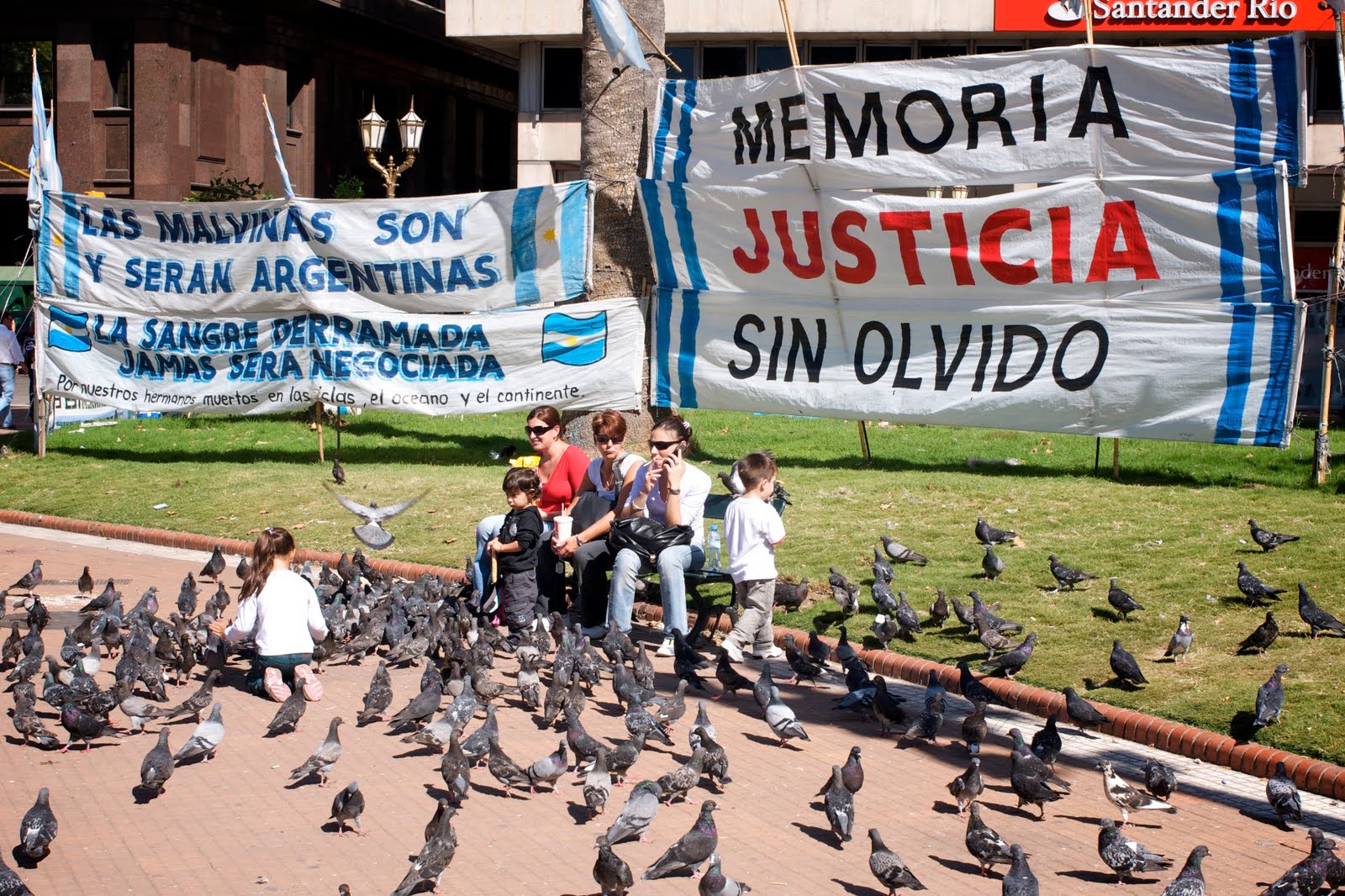
Plaza de Mayo is the centre of town, and home of permanent protesters and war veterans. During the dirty war the famous madres de plaza de mayo congregated here to protest against the disappearance of their sons under the military government. Their symbol of a white shoal is painted all over the ground in tribute to their remarkable courage.


Plaza de mayo


A few blocks south of the centre is San Telmo, my favourite neighbourhood. The narrow cobbled streets still bear the remnants of the old tram tracks. Crumbling buildings, traditional cafes and antique shops sit side by side. It was, and still is, one of the poorest barrios, but its cultural wealth draws in the tourists. It has a slightly edgy, real feel to it. Graffiti and murals hang off every wall. It's the kind of place where novels are set. And written.


San Telmo


Every Sunday San Telmo throbs with a huge feria, or street market. The usual rubbish nestles in amongst antiques, paintings, photographs, handmade toys and clothes, whilst the tourists rub shoulders with the porteños. Impromptu tango shows erupt all over the place, kids display their accordion playing skills and little old men break hearts with their gentle guitar strumming.


Other parts of town, most notably Palermo, where I have been living, feel a lot more European. At its best, the city can be very stylish - a bookstore in an old theatre, a giant flower sculpture with petals that open and close with the light. Colourful, wild buses that never quite go where you expect them to. The streets buzz with activity, not to mention traffic. At its worst it can be filthy, stinking and claustrophobic.


El Ateneo

Floralis Genérica

Colectivo


In amongst all the mayhem, dog turds and contradictions, are a few little sanctuaries. They mostly take the form of cafes, where one can while away the hours sipping occasionally bearable coffee and watching the world go by. It's hard to imagine the place without them, and you kind of know the other people are in there for the same reason; to take refuge.


Towards the end of the 15-hour flight from London, the Captain announced that we would shortly be arriving in "Beautiful Buenos Aires." At times, I can see his point, at others, less so. Part of the city's appeal is this paradox - you need to constantly shift your perspective in order to see it as a whole. If you stay still, it will grow old on you quickly and lose its charm. Keep moving then - for me that means leaving of course. Tomorrow. Like all good things in life that we take for granted, I know I'm going to miss it once it's gone.

Yerba Mate

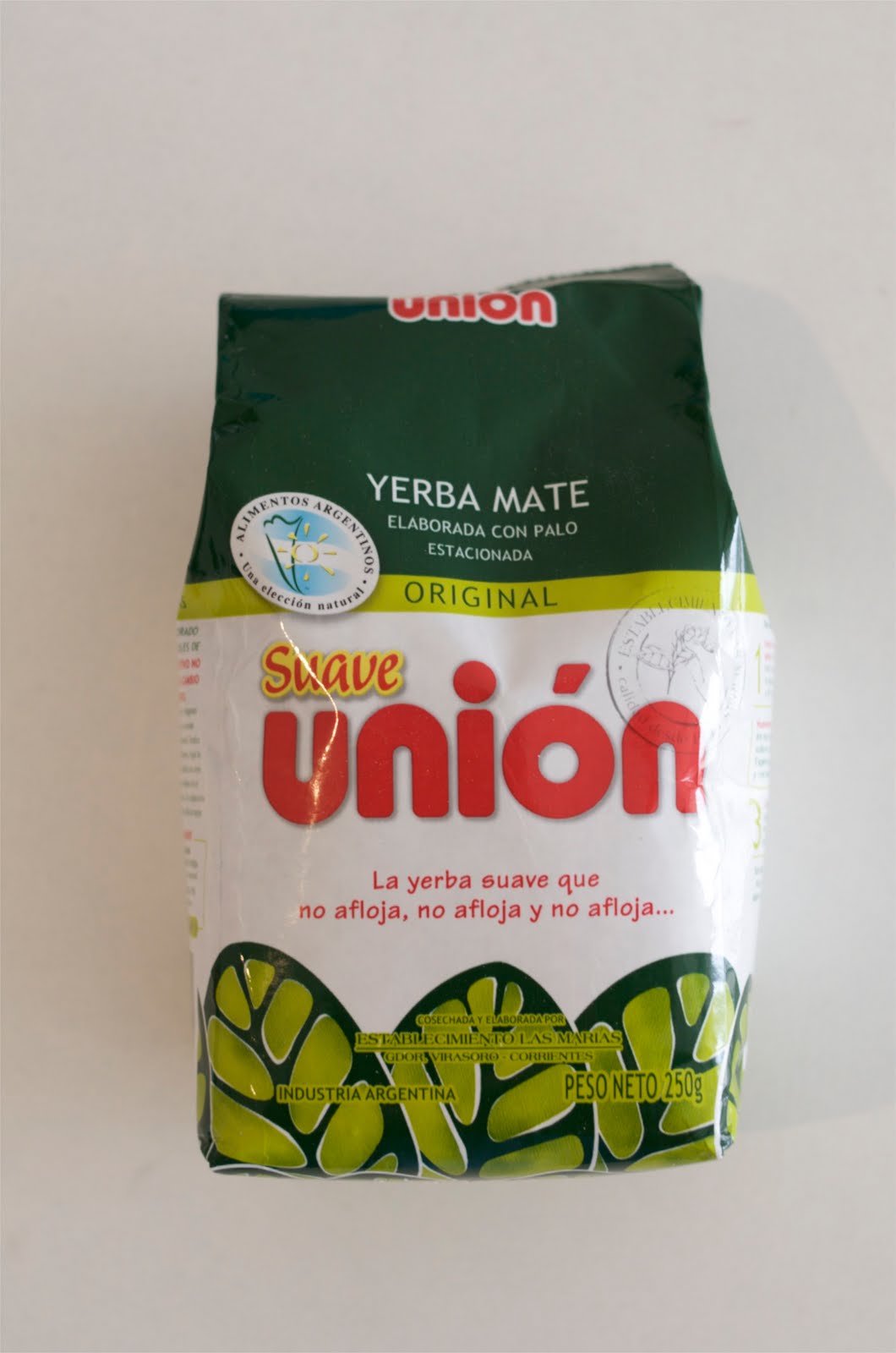
I can't leave Argentina without saying something about mate (ma-tay). Mate is to the Argentineans (and the Uruguayans, Paraguayans, Chileans, plus a few Bolivians and Brazilians who live near their borders) what tea once was to the English. The articulation of a nation's civility, in the form of leaves and water.

You need three things. Firstly, Yerba (the plant) dried and packaged. There are hundreds of varieties that range in bitterness (the drink is basically very bitter, though you can add sugar if you wish). The stalks of the plant are usually included in the mix, that looks not entirely dissimilar to good old 'normal' weed we used to smoke when I was young and stupid.


Yerba mate

The dried leaves and stalks 

Next you need a gourd or mate in which to prepare the brew, and a bombilla, a kind of metal straw through which to drink it. You almost fill it to the top with yerba, and bang it on your hand to remove any excess dust. In goes the first serving of hot (not boiling or boiled) water, and you're ready to drink your first mate.

Mate, yerba and bombilla: the holy trinity

Drinking it feels a bit like smoking a pipe. I can't help but feel a little Holmesian as I pace up an down my apartment puzzling over the latest mysteries to which I turn my keen mind.

A three pipe problem

When the first mate is drunk, you just top up again, and keep going until it loses its flavour. Drink it at home or out and about, with gourd and flask of hot water tucked under one arm. The dexterity of Uruguayans in this respect is amazing, they carry their flask and mate no matter what else they are doing (riding motorbikes, horses, climbing ladders). Drink it alone, or better still, among friends, filling the gourd for each drink and passing it around like a peace pipe. If only we'd had yerba instead of spliffs when I was younger. I'd have made a great detective.